
News
Work of the future in Lausitz
In December, the "PerspektiveArbeit Lausitz" consortium met to discuss the current state of research on the working world of the future in the region and to further intensify cooperation.
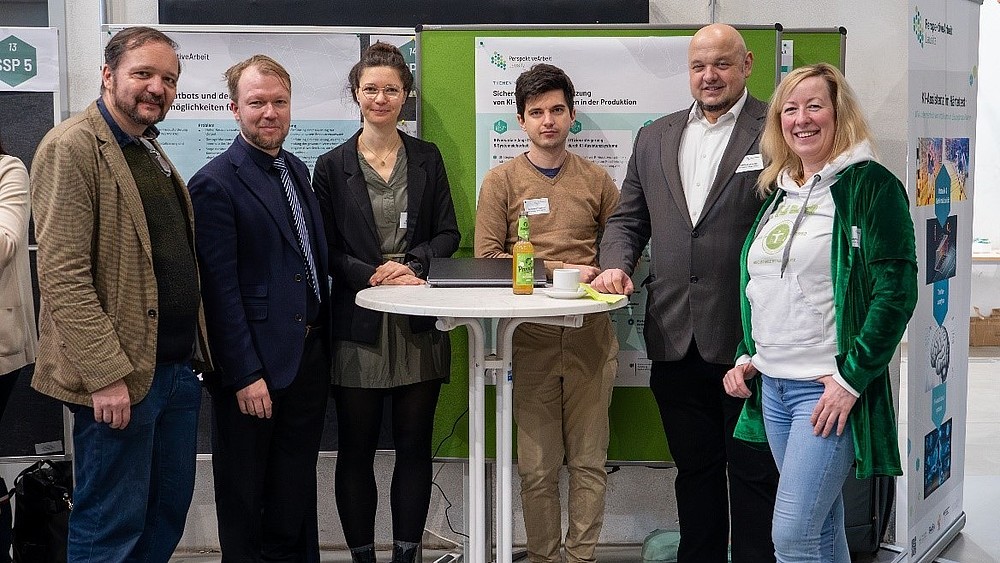
The consortium of the federal research project “PerspektiveArbeit Lausitz” met on December 10, 2024, in Görlitz to discuss the current state of research on the future of work in the Lausitz region and to strengthen their collaboration.
The PerspektiveArbeit Lausitz (PAL) consortium, a center of excellence for the future of work in the Lausitz region, brings together representatives from five universities as well as 27 companies and associations in the region. The center of excellence is characterized by interdisciplinary teams specializing in work research and engineering. It is particularly noteworthy that the Zittau/Görlitz University of Applied Sciences is also involved with an interdisciplinary research team led by Professors Matthias Schmidt (Chair of Work and Organizational Psychology) and Sophia Keil (Chair of Business Administration, specializing in Production Management and Logistics). The Zittau team is part of the SCO-TTi research group . Tanja Schwarz from HSZG organized the event together with Robert Eckardt and Sindy Herrman from Mittweida University of Applied Sciences, as well as Katrin Meusinger from Silicon Saxony.

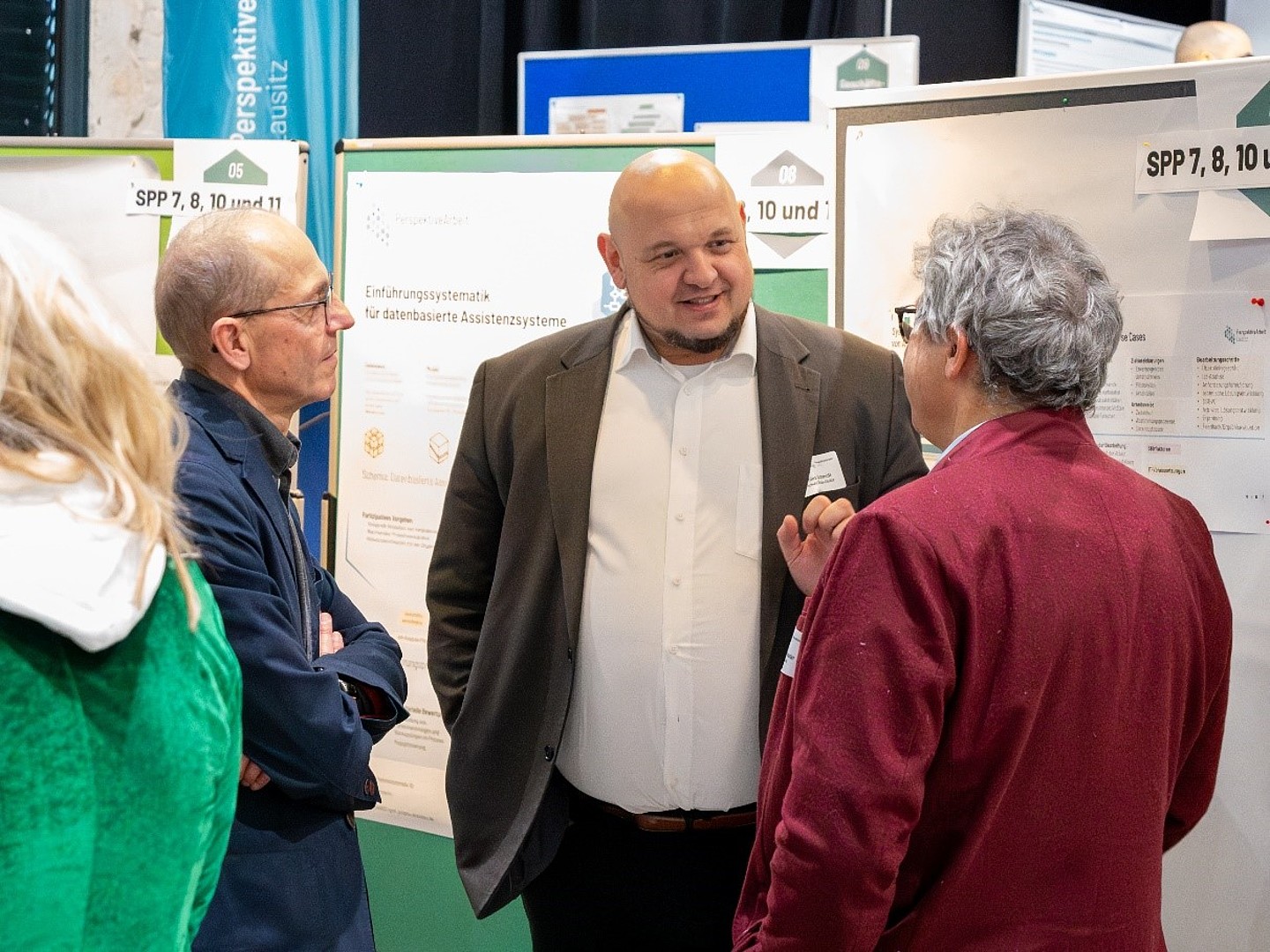
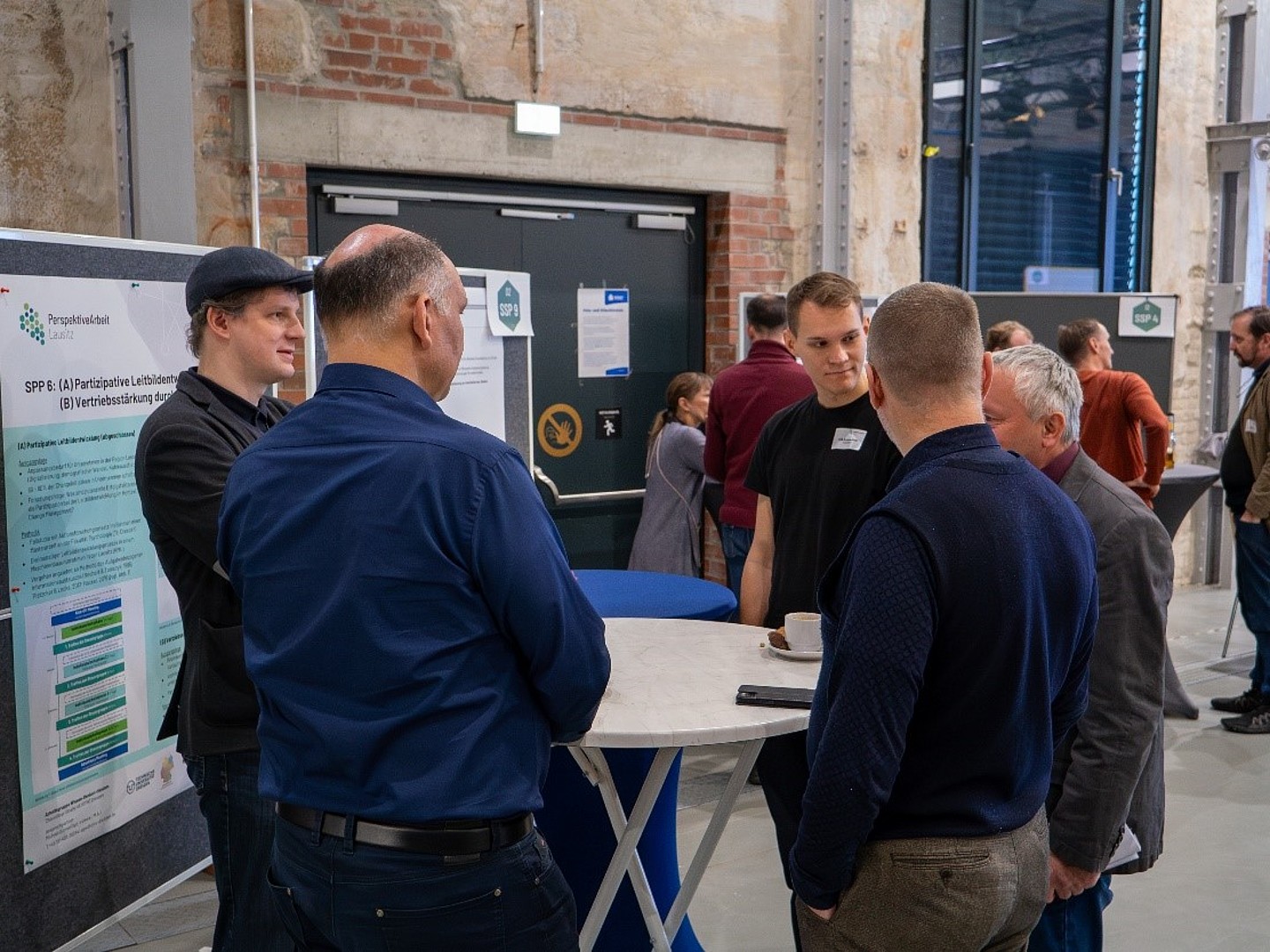

The event began with an opening address by the Vice President for Education and International Affairs, Professor Sophia Keil. This was followed by an open discussion organized around topic clusters specific to each research focus.
The following topics were presented by the respective focus projects: Ergonomic support for manual assembly using AI, the design of mobile work processes for the installation of PV systems, AI systems for the intuitive operation of robots in manufacturing, systems for recording and evaluating physical and psychological stress factors when working with AI, the introduction of a digital learning management system, the digitization of laboratory analytical processes and knowledge management, a holistic approach to implementing data-driven assistance systems, the establishment of a decision support system, the use of LLMs and RAG, an AI-supported assistance system for quality assurance, a concept for the safe and effective use of AI assistance systems in production, and potential applications for in-house chatbot solutions.
Participants in the 12 priority projects from the universities and attending companies exchanged information on the current status and new findings in their respective research areas in order to identify potential synergies and better advance the projects.
On this page you will find the main projects of the companies in the PerspektiveArbeit Lausitz Competence Center.
In the PerspektiveArbeit Lausitz project, we combine expertise from research, engineering and practice to jointly develop innovative solutions that will make the work of the future in Lausitz more efficient, healthier and more attractive for everyone involved. The key to success lies in close collaboration and the courage to break new ground. In-house chatbots are an excellent example of how we can improve everyday working life. They automate routine tasks, such as answering frequently asked questions, managing appointments or providing information. This allows employees to spend their time on innovative activities. In this way, we create a working environment that sustainably increases both the productivity and well-being of employees. Continuous exchange is important here. I am very pleased that this important meeting took place at the Görlitz site.
”The Zittau/Görlitz University of Applied Sciences presented the current status of its research on the topics “Safe and Effective Use of AI Assistance Systems in Production” and “In-House Chatbot Solutions for SMEs.” For companies, the benefits of collaborating with the HSZG research team include the opportunity to learn about and test tools for creating their own in-house chatbots in order to identify profitable applications. In addition, the team supports them in developing and implementing a strategy for introducing new AI tools, taking relevant success factors into account.
The event generated numerous ideas for collaboration between the key projects as well as an analysis of opportunities for improvement. The event concluded with a group visit to the Görlitz Christmas market, which enchanted the participants with its unique atmosphere and many regional traditions.
AI solutions such as intelligent chatbots can support companies in Lausitz in promoting structural change. Here, central principles of Industry 5.0 are taken into account as the AI solutions combine technological innovation with social responsibility. Through human-centered approaches, they improve communication, relieve employees of routine tasks and create space for creativity and collaboration, which is an important contribution to a sustainable and inclusive economy of the future.
”The event at the RABRYKA impressively demonstrated how committed the partners of the PAL consortium are to making the Lausitz region fit for the future. Through intensive cooperation and innovative ideas, the working world in Saxony and Brandenburg is to be sustainably shaped and a human-centered integration of data-based assistance systems is to be promoted.
Through PAL, 5 universities and 27 companies in Saxony and Brandenburg are conducting research and working to make work in the Lausitz region more efficient, attractive, and healthier through data-driven assistance systems. AI is thus being used to support structural change in the Lausitz region and create new employment opportunities to facilitate the transition from the coal industry to a long-term stable and sustainable economy. This is being done while taking into account the core values of a people-centered approach, sustainability, and competitiveness. The term “PAL” means “buddy” in English; accordingly, the AI solutions are intended to serve as a welcome source of support for users.
Project Duration:
October 1, 2023–October 31, 2026
Funding:
The underlying project is funded by the Federal Ministry of Education and Research under grant number 02L19C329.