
Message details
Clever heat for the region
At Energie- und Wasserwerke Bautzen, Prof. Matthias Kunick is once again making a strong contribution to an ecological and economical local heat supply.
Energie- und Wasserwerke Bautzen (EWB) became aware of the expertise of Zittau/Görlitz University of Applied Sciences in the field of heat supply through the activities of the Saxony⁵ transfer project, specifically in the “Energy” transfer field.
In May 2023, EWB and HSZG signed a cooperation agreement, on the basis of which the project was led by Prof. Matthias Kunick. Engineers Thomas Gubsch, Martin Herling, and Jonas Pfeiffer contributed their wealth of experience to the project. The collaboration focuses on decarbonizing the heating network. The two partners combine EWB’s practical experience with the scientific perspective of HSZG.
An initial project focused on methods for developing neighborhood-level concepts for heat supply based on renewable energy sources and their practical application. The study focused on two city neighborhoods intended to serve as a blueprint for developing new concepts for other residential areas.
The first neighborhood consists of apartment buildings constructed in 1959 and 1960, which were renovated in the 1990s and are heated by gas boilers. The second neighborhood consists of apartment buildings constructed between 1969 and 1973, which were renovated in the early 2000s and are supplied with district heating.
For both neighborhoods, the heating demands and supply potentials from renewable energy sources were analyzed, and based on this, options for future heat supply were developed. Possible renovation measures for the building envelopes were also considered. Investment and operating costs were estimated for the developed options, and potential subsidy programs were identified.
The results in detail
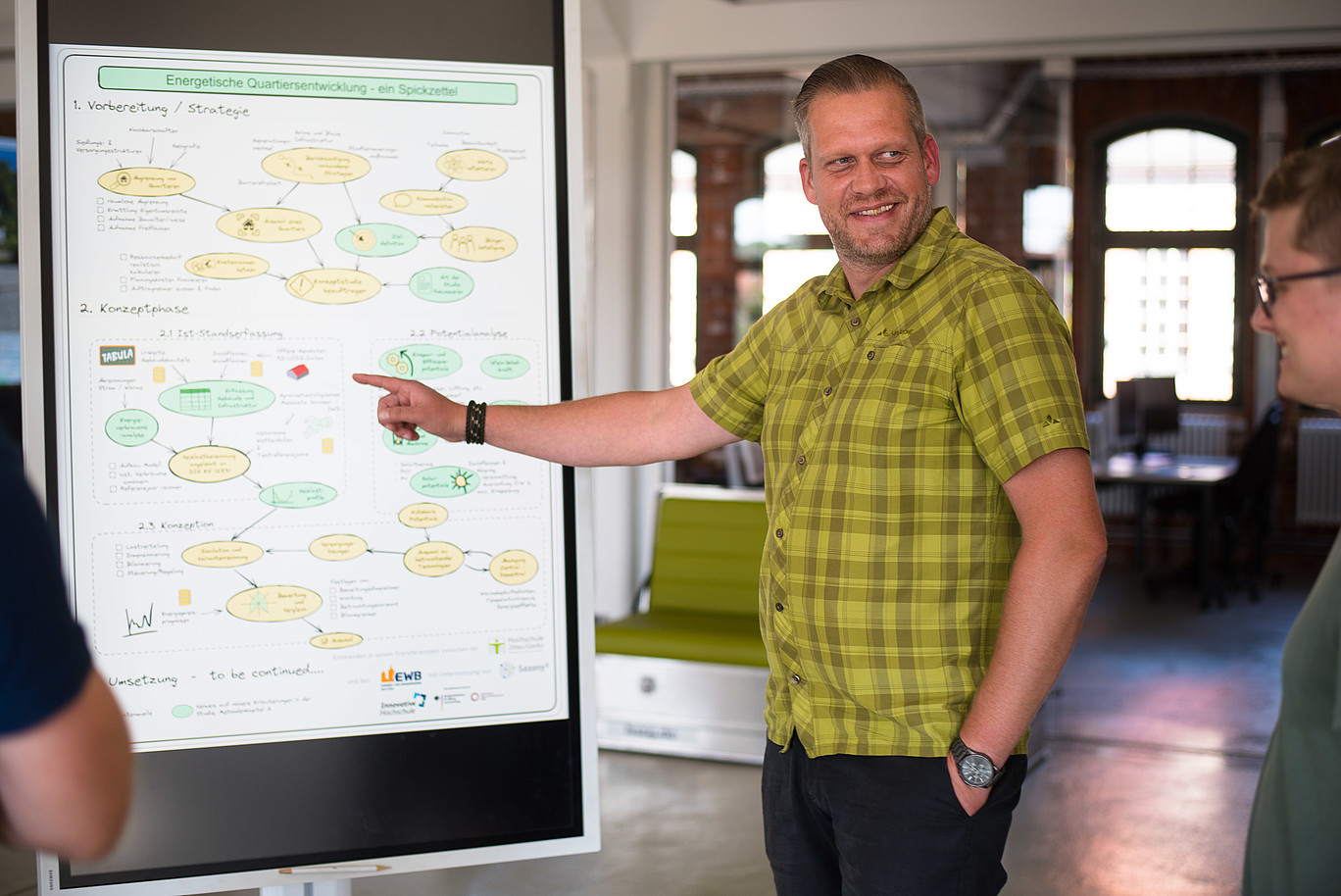
The result of the project is a procedure for the development of heat supply concepts for the city of Bautzen. The aim is to ensure that the supply of heat based on renewable energy sources is both reliable and as economical as possible. The project results show that this can only be achieved by including all possible potentials, such as solar energy (photovoltaics or solar thermal energy), biomass (e.g. wood pellets or biogas), environmental or waste heat. In addition, potential energy savings and the reduction in flow temperatures required for the efficient use of heat pumps through the energy-efficient refurbishment of residential buildings must be investigated. Furthermore, the use of photovoltaics and solar thermal energy, possibly also as a hybrid solution, must be considered if space is available. An economical and therefore consumer-friendly supply solution can only be found by taking a holistic approach.
For the first district, it was shown that it is possible to gradually switch from gas boilers to a completely renewable heat supply. This is achieved through the use of air/water heat pumps, which are installed upstream of the gas boilers and ultimately replace them completely in the course of the building refurbishment. For the second district, the use of a heat pump in the return flow of the district heating network was investigated as an alternative to the existing district heating solution. The resulting cooling of the return flow leads to an increase in efficiency in the district heating network. Of course, the flow temperatures in the district heating supply must also be reduced in order to reduce heat losses and increase energy efficiency.
The HSZG research team proposes that EWB implement this by hydraulically balancing the heating systems in the buildings and through cost-effective energy refurbishment measures.
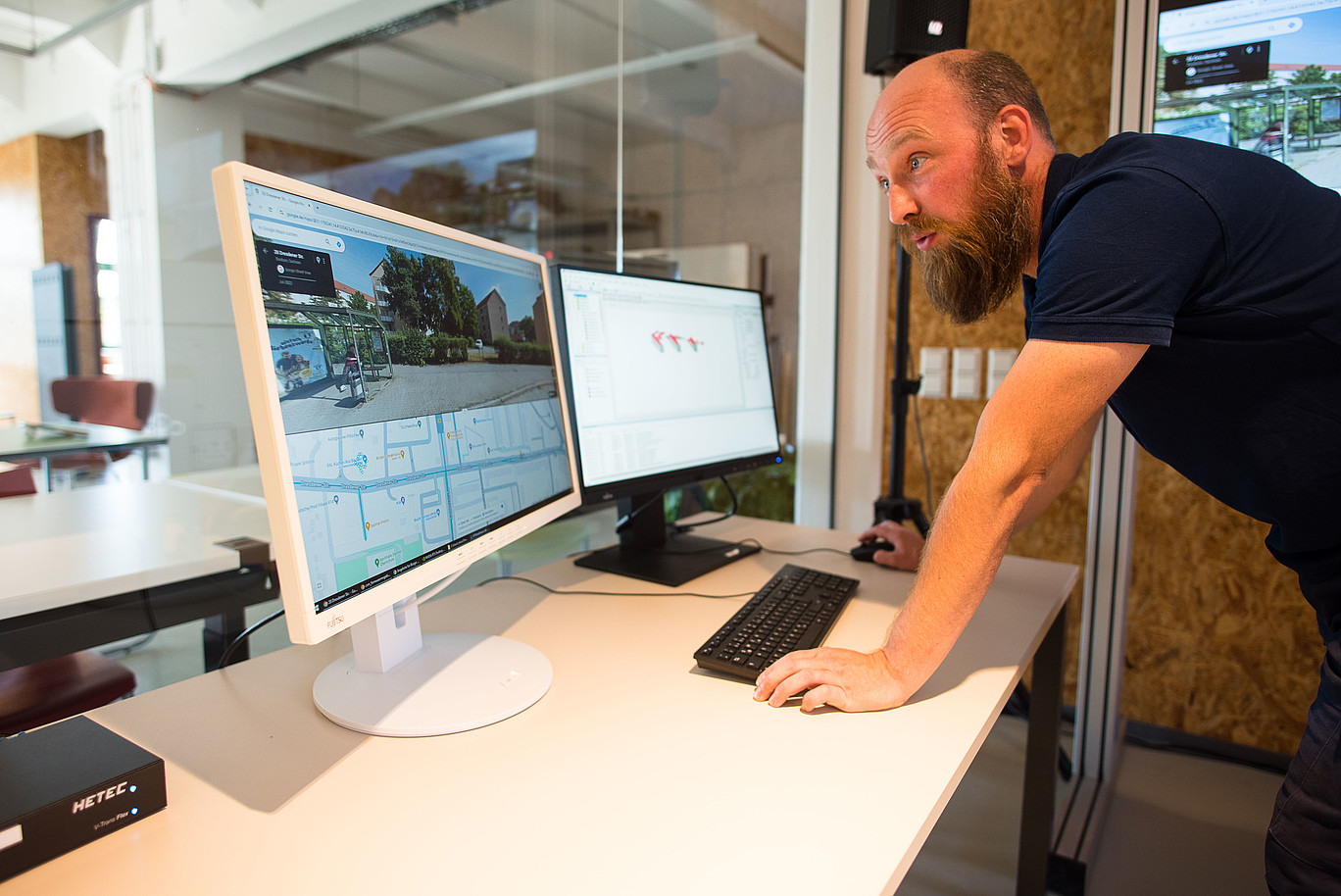
In an SMWK project on the "Development and testing of methods and tools for the design of sustainable heating networks", research associate Jonas Pfeiffer is working on software that can be used to efficiently record and analyze the needs and potential of districts. By working on specific projects, Mr. Pfeiffer obtains information on the technical and economic key figures used in practice as well as on the functions to be provided by the software. For their part, users of the software benefit from the methods implemented in the software and can thus quickly develop supply variants for specific neighborhoods and evaluate them according to technical, economic and ecological criteria.
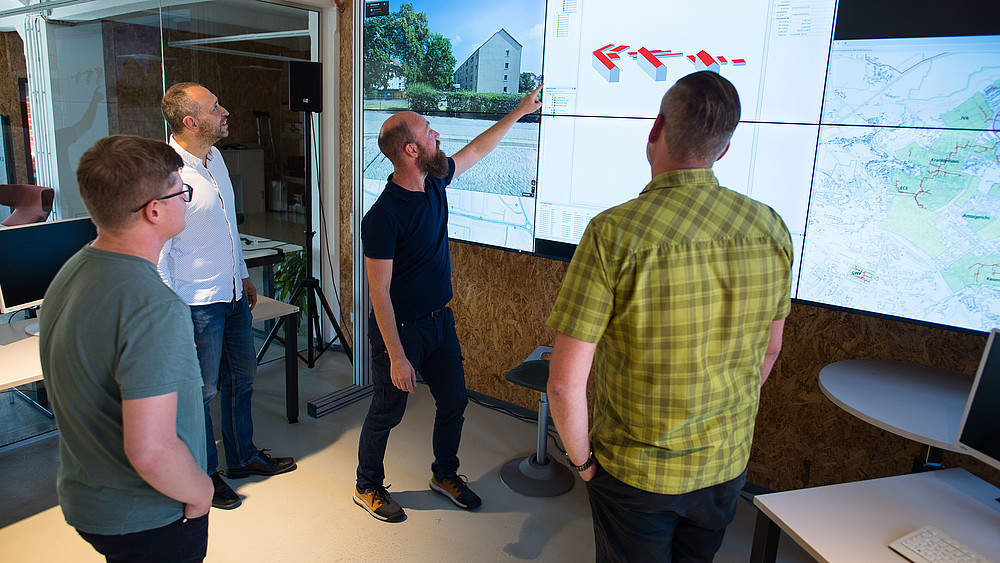
The work on the neighborhood concepts was implemented in the CELSIUZ transfer laboratory. There, the Saxony5 project developed the "control center" as a digital tool for creative work and knowledge transfer. In the future, various target groups such as energy suppliers, housing cooperatives, energy consultants and citizens will be able to obtain information about projects, problems and solutions at the control center in the CELSIUZ laboratory in a similar way. The Saxony5 project and the HSZG are making an important contribution to the heat transition through event formats such as the series of events on municipal heat planning held jointly with SAENA.
Text: Kristin Sprechert and Prof. Matthias Kunick

1st floor