
Young talents for long-term projects
A report on KIA student Richard, who has found an ideal practical partner in Deutsche Bahn.
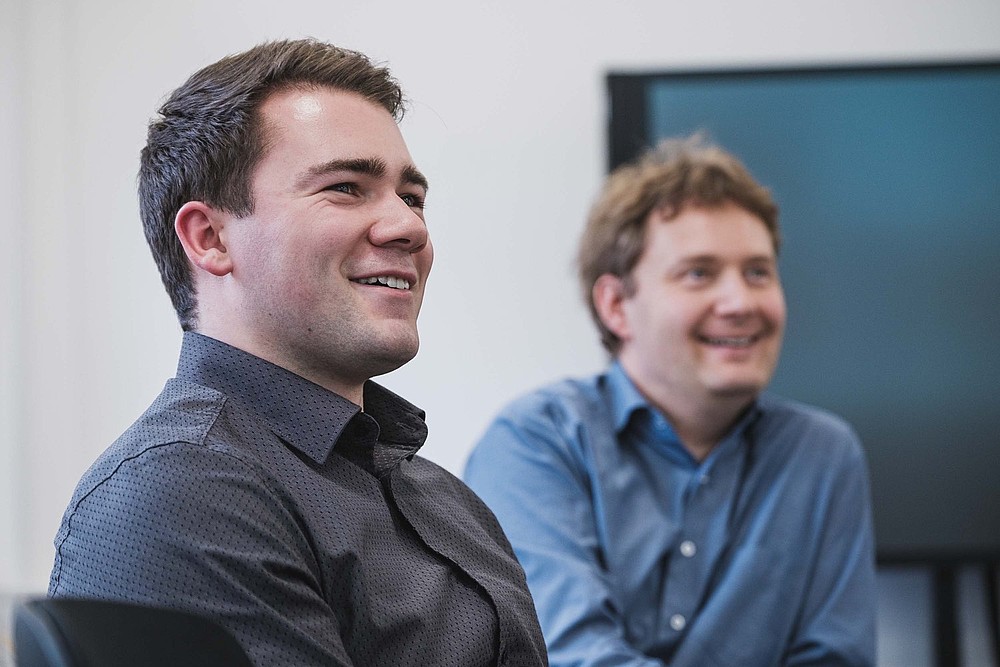
Would you like to start a degree program while gaining practical experience? Then the dual degree program with integrated vocational training at the Zittau/Görlitz University of Applied Sciences (HSZG) might be the right choice for you.
Let Richard Kretzschmar’s experiences inspire you!
Richard was already passionate about technology while he was in school. He excels at physics and math. He earned his high school diploma at the sports high school in Dresden.
During fall break, he completed a voluntary internship at ENSO. After those two weeks, it was clear to him that he wanted to study electrical engineering—and definitely through a dual degree program. He finds this combination of theory and practice very exciting.
So he searched online for “dual degree in electrical engineering” and landed directly on the website of the Zittau/Görlitz University of Applied Sciences. The KIA (sandwich-style) degree course is featured there, and there’s also a comprehensive overview of all the partner companies involved in the program. Deutsche Bahn appealed to Richard; he submitted an application and received a response right away, including an invitation to an interview.
The program starts in September. An initial get-together for all railway students took place in Fulda. There, Richard met his fellow students for the first time—the ones he’ll be studying with in Zittau. Deutsche Bahn made it possible for him to participate in the HSZG’s preparatory courses (three weeks before the start of the program). Looking back, Richard finds the refresher courses in math, electrical engineering, and physics to be very helpful. He spends the first half-year entirely at the university, gaining a wealth of theoretical knowledge. At first, he lives in the dormitory, but soon moves into his own apartment, which is good to find in Zittau and is also attractively priced. This is because Richard has a decisive advantage over students who enter directly into the degree program. He receives a training stipend from the company throughout his entire studies and is financially independent.
Richard feels at home in Zittau. Thanks to the “Come In” weeks at the university, he already knows students in higher semesters. He knows where to find someone to turn to if a problem arises. He adapts well to the fixed schedule for KIA students. The transition from high school to college is easy for him. He quickly develops his own time-management routine. After the first semester, the 4-week rotation between the university and the company begins. The coursework at the university is very condensed, but during the practical training period, he has a four-week break from his studies and can take his time catching up on material he didn’t understand. During the training period, he works full-time at Deutsche Bahn for 38 hours a week. Richard works from 6:30 a.m. until early afternoon, which leaves him sufficient free time—time he often spends at the Leipzig Lake District in the summer. For the duration of his training, he rents an Airbnb apartment in Leipzig with fellow students—a temporary shared apartment.
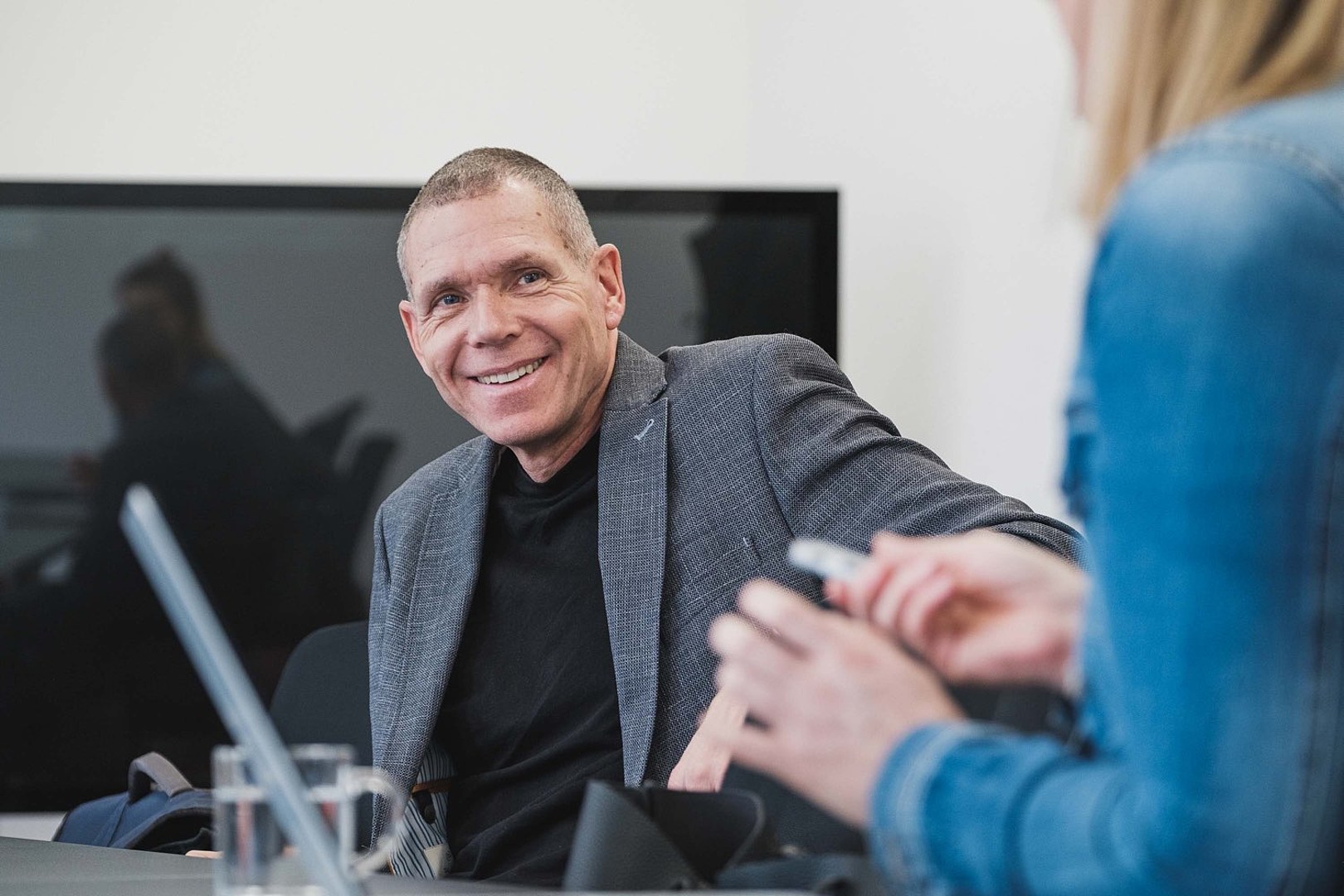
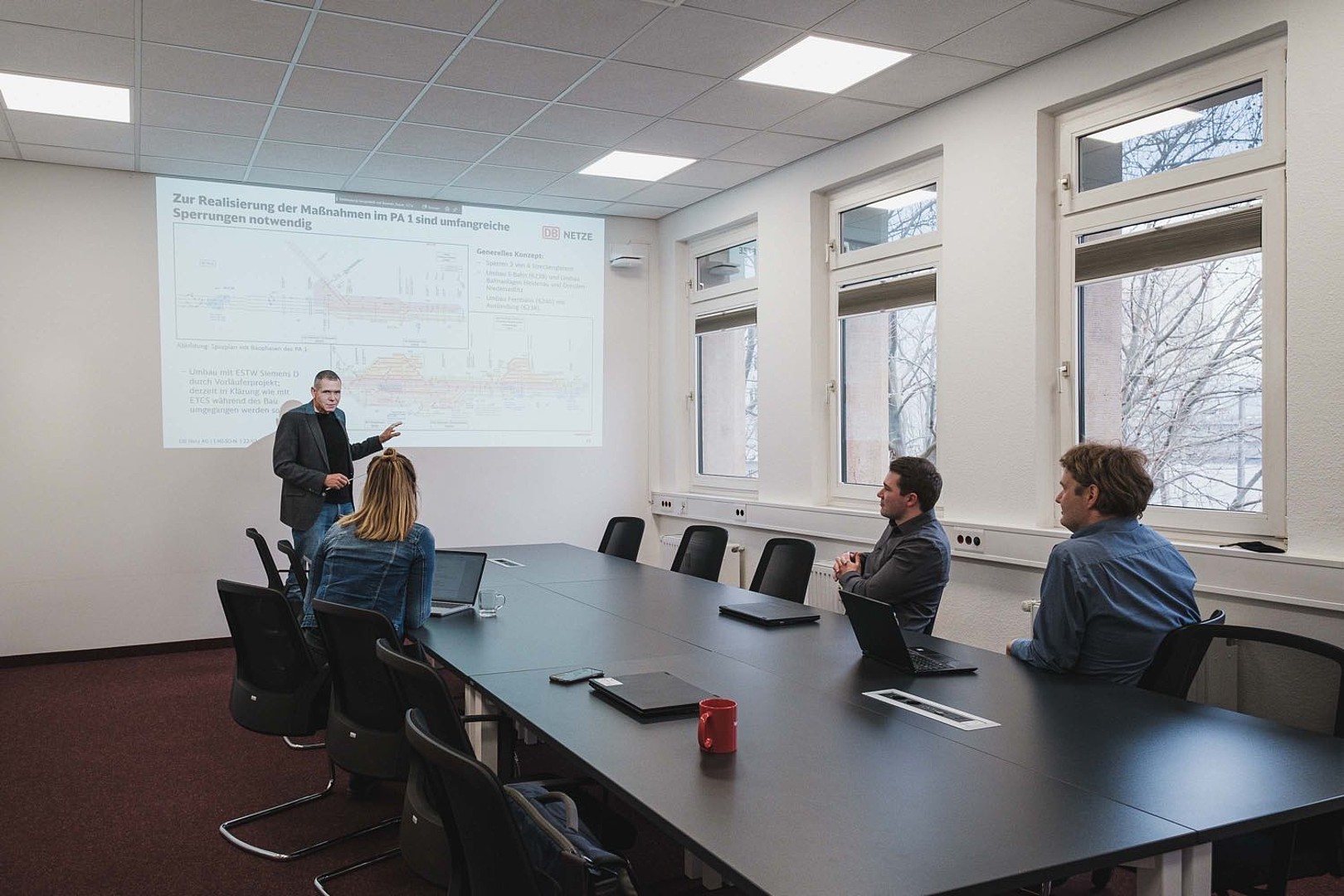

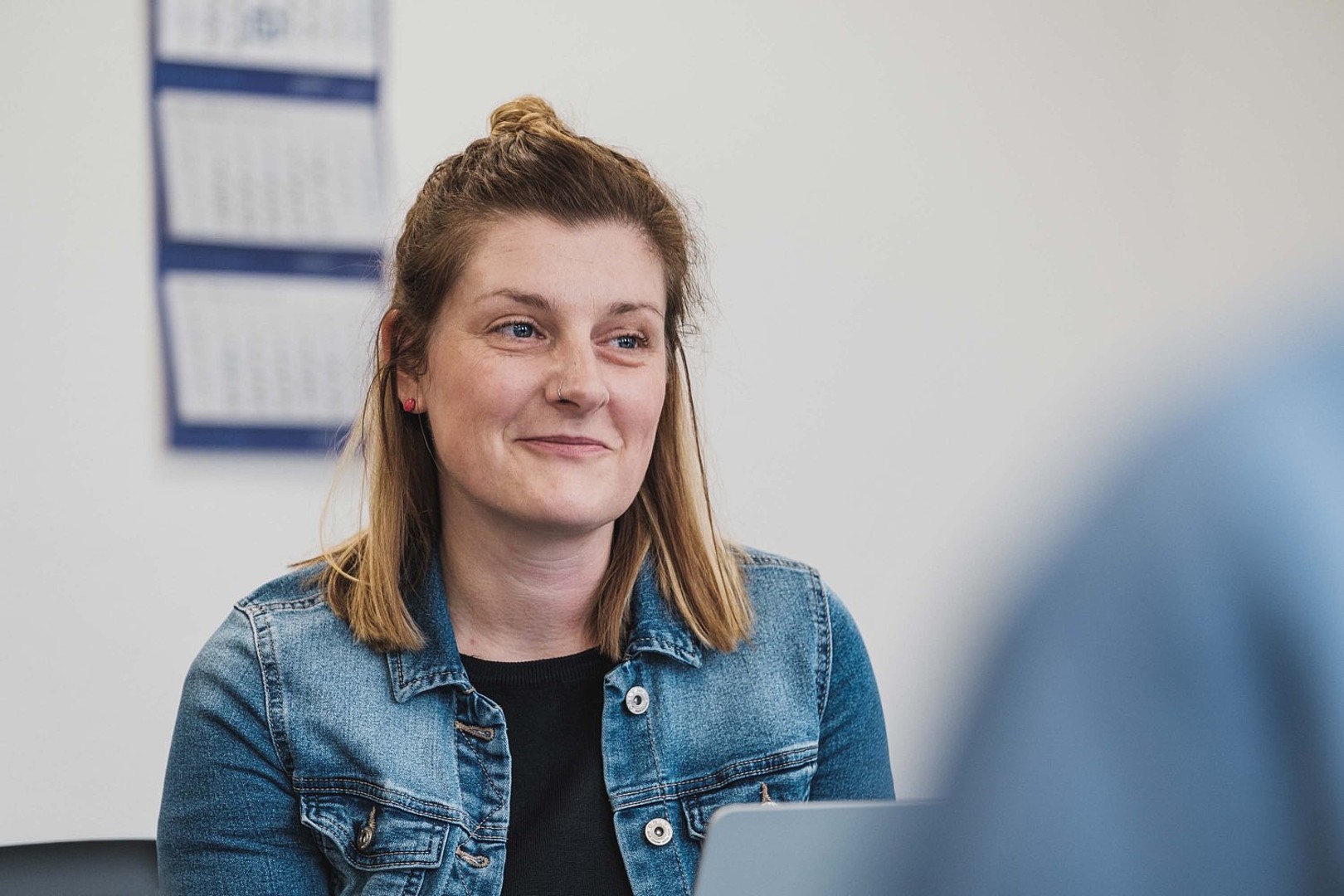
He feels good about being prepared for the skilled worker exam. The field-specific coursework at the university and the hands-on experience at the company are well-coordinated throughout the training program.
The apprenticeship phase goes by quickly, and after 2 ½ years, Richard becomes an electronics technician for industrial engineering. The time spent in his major flies by just as quickly; his practical assignments at the company now take place only during breaks between classes and during the work placement semester.
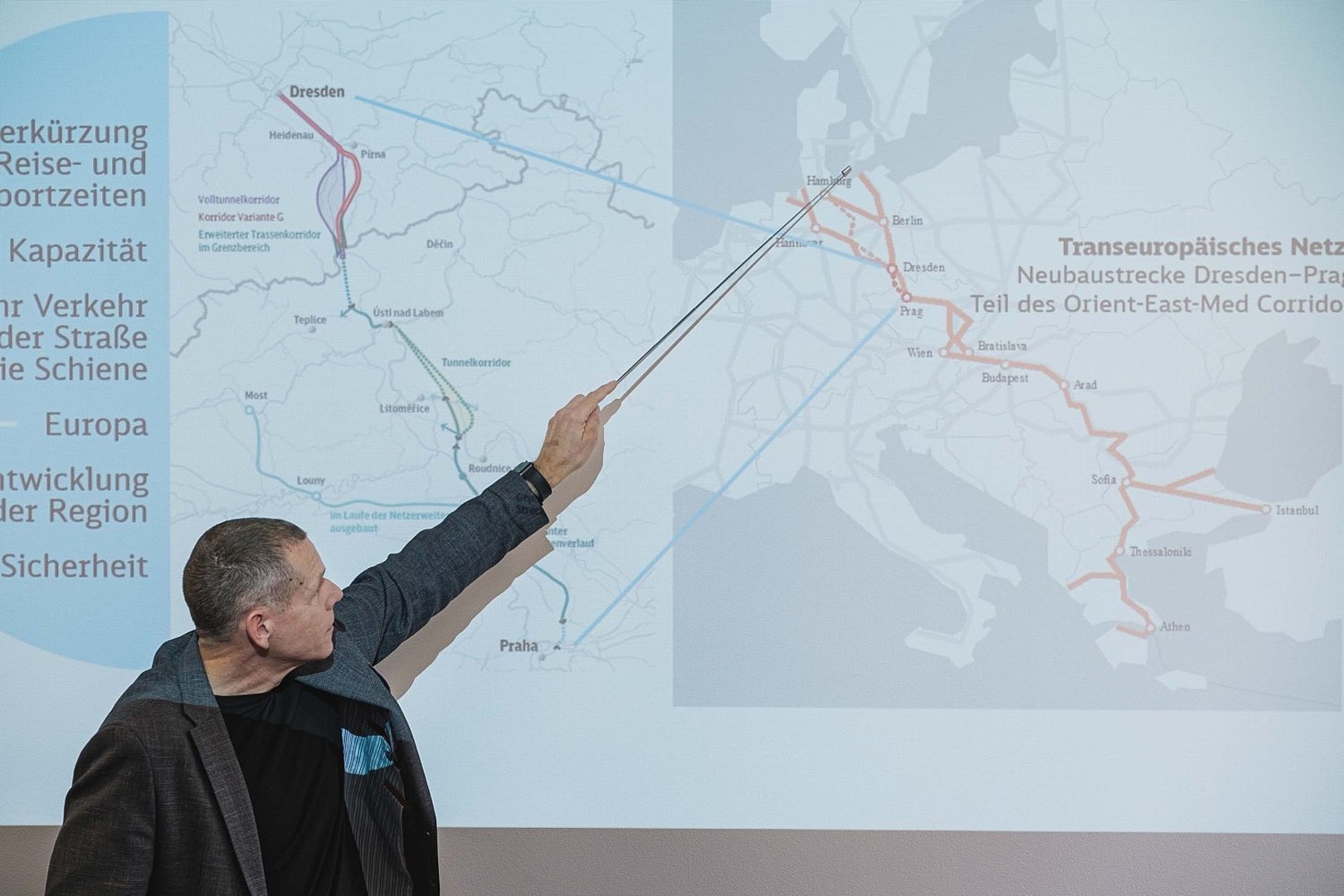
He spent four and a half years in maintenance. For his Diplom thesis, he’s looking for another exciting field. He switches to project planning. There, he becomes part of a major project—the new Dresden–Prague rail line—and finds his thesis topic: “Analysis of the boundary transition in an ETCS simulation environment based on the planned full-tunnel variant of the new Dresden–Prague rail line.”
ETCS is a new train control system currently being introduced in Europe. Previously, each country had its own system. The challenge lies in ensuring that the system functions seamlessly across borders. In the Czech Republic, this system still needs to be developed.
For the first time, the Diplom thesis will also involve collaboration with the research department of the German Center for Rail Transport Research (DZSF). The DZSF will provide a simulation tool that can be used to visualize and evaluate the effects of parameter adjustments.
This large-scale project presents many challenges. Not only technical issues—such as track structure, roadbed, overhead lines, and Control and safety technology—but also matters of structural collaboration and cross-border operations must be resolved. Many individual solutions must be found. The technical challenges in the project are enormous. Finally, construction will also take place on existing infrastructure, which will require numerous track closures. The goal is to eliminate the Elbe Valley bottleneck, as it prevents high speeds, causes noise pollution, and has already reached its capacity for freight traffic. That is why a new tunnel is to be built. The project is still in the planning phase. The specific goal is a travel time of approximately one hour between Dresden and Prague. Preliminary planning is expected to be completed internally soon, followed by an internal review within Deutsche Bahn. Parliament is expected to address the matter around 2025, after which the detailed design, planning approval, and construction planning phases can follow. Construction is then expected to begin in 2032.
That’s a long planning period for a major project. That’s why Deutsche Bahn is actively seeking young professionals to plan and oversee long-term projects. According to project manager Michael Menschner, KIA students have the advantage of already understanding how the railway company operates, since such an organization is highly complex and interconnected—which normally means that the onboarding process after graduation takes an extremely long time. That’s not the case with KIA students. They know what to expect. Deutsche Bahn offers every KIA student a permanent employment contract upon graduation. There are many ways to start a career at DB. Even while they’re still in school, students get a feel for the field that suits them best.
Richard is looking forward to the thesis phase. And if everything goes according to plan, he’ll continue to support the project for some time to come.
Are you interested in learning more about the KIA (sandwich-style) degree course and our partner, Deutsche Bahn, along with its subsidiaries? Then feel free to contact us!
Together with Deutsche Bahn, the university is launching a new project in April 2023 designed to help high school students in 11th grade and above explore exciting career fields and to inspire and prepare them for a dual degree program with Deutsche Bahn. Learn more here.
1st floor